
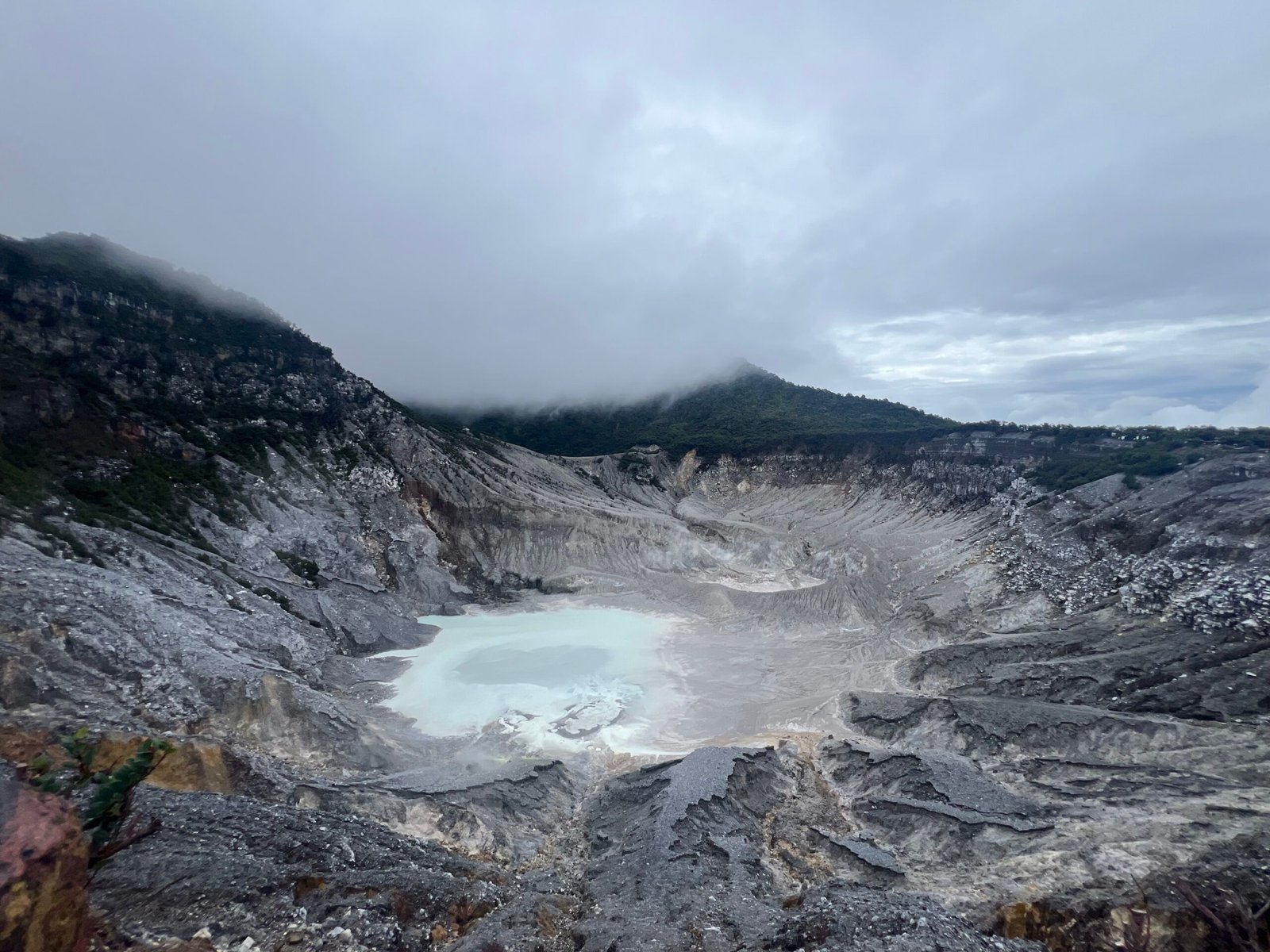
Located just north of Bandung, Tangkuban Perahu is one of West Java’s most recognizable volcanic landscapes. Unlike many volcano trips that require a long hike, the main crater can be reached easily by road, while nearby Kawah Domas offers a much closer look at steaming vents, hot water, and the geothermal activity beneath the mountain.
I visited both Tangkuban Perahu and Kawah Domas on the same trip, and the two places felt surprisingly different. One is about the scale and dramatic view of the crater, while the other lets you experience the volcano much closer to the ground. In this guide, I’ll share what the visit was actually like, along with my own photos and a few things worth knowing before you go.

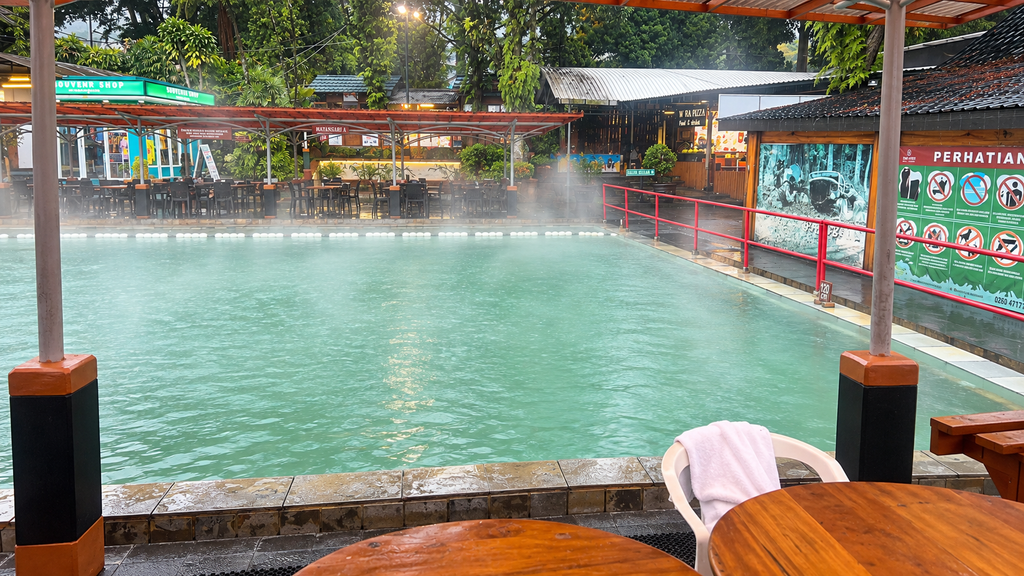
Staying at Sari Ater Hot Spring Resort
For this trip, I stayed at Sari Ater Hot Spring Resort in Ciater, a convenient base for exploring the Tangkuban Perahu area.
The biggest reason to stay here is the hot spring experience. The resort is surrounded by the cool, green landscape of the highlands, and guests can enjoy naturally heated mineral-rich water without having to leave the resort area. After a day around the volcano, relaxing in the warm water was easily one of the highlights of the stay.
More Than Just a Hot Spring Hotel
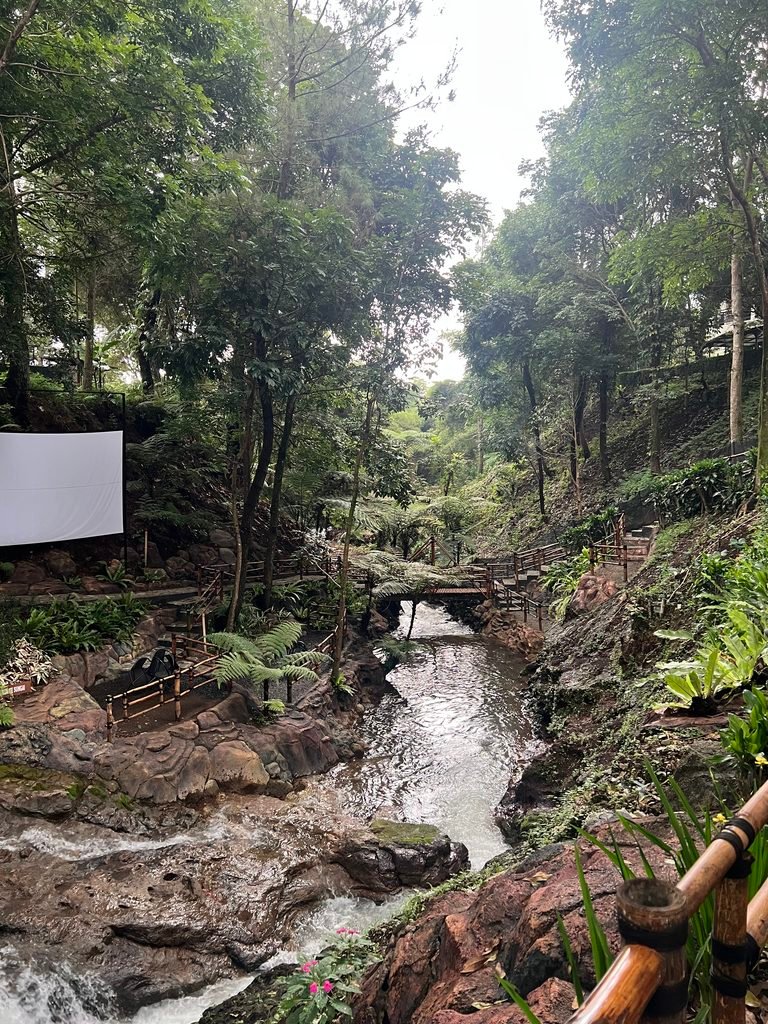
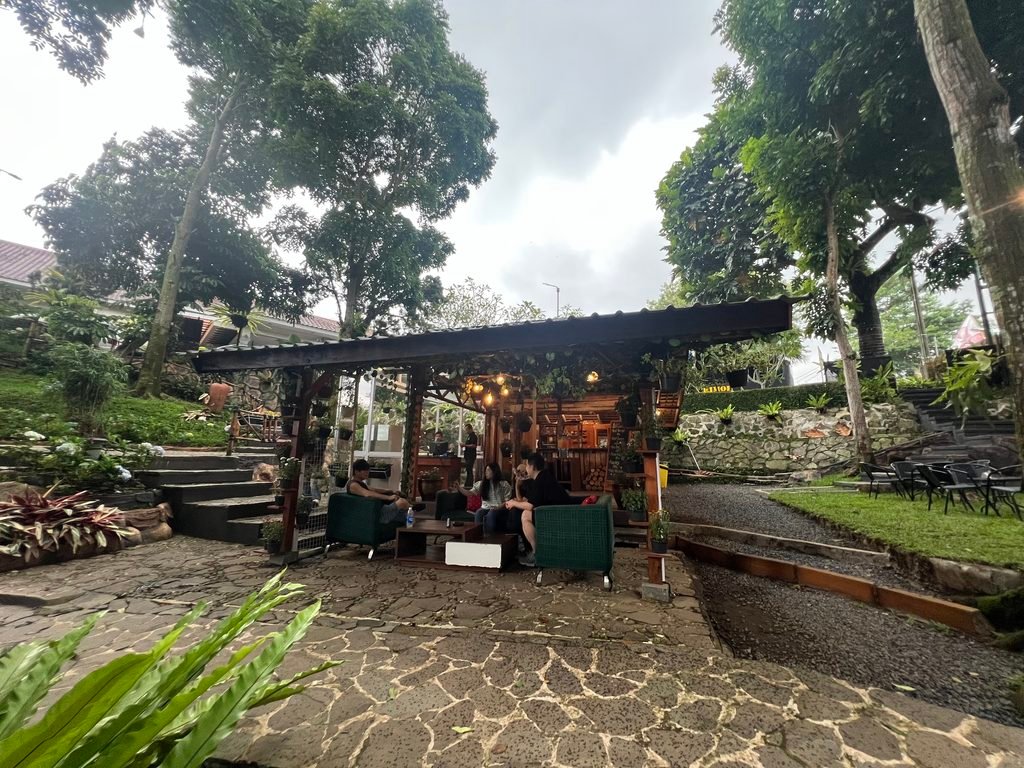
What I liked about Sari Ater was that the experience was not limited to the hot springs. Around the resort, there are green spaces and a valley with a stream below, giving the property a much more natural atmosphere than a typical city hotel.
There is also a café area overlooking the valley, where you can sit, have a drink, and enjoy the cooler mountain air. It was a nice place to slow down before or after exploring the surrounding area.
Another advantage is the location. Staying in the Ciater area puts you close to Tangkuban Perahu, making it easy to combine the resort, the volcano, and Kawah Domas in the same trip.
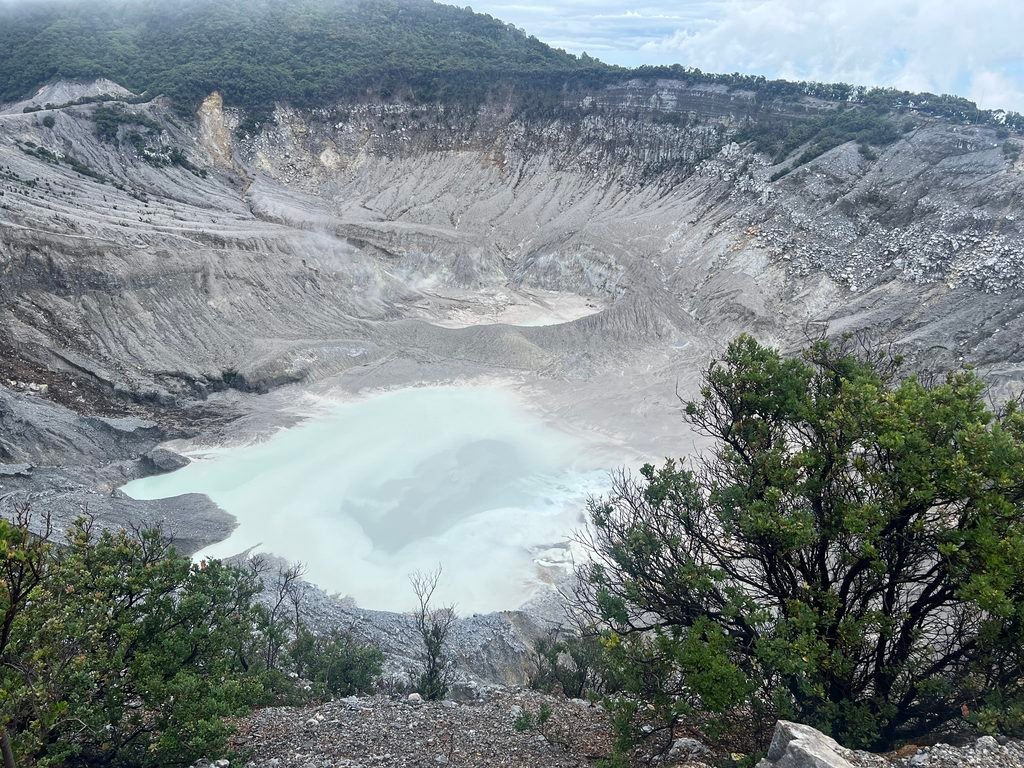
Getting to Tangkuban Perahu
Tangkuban Perahu is located north of Bandung and is relatively easy to reach by car. From Sari Ater Hot Spring Resort, the drive takes around 30–40 minutes, making it a convenient base for visiting the volcano. As you approach Tangkuban Perahu, the road gradually climbs through the cooler highlands, surrounded by forests and mountain scenery.
One of the best things about visiting Tangkuban Perahu is that you don’t need a difficult hike just to see the main crater. Vehicles can travel close to the crater area, making it an easy destination even if you are traveling with family.
The temperature can feel noticeably cooler than Bandung, and the weather around the mountain can change quickly. Bringing a light jacket is a good idea, especially on cloudy or rainy days.
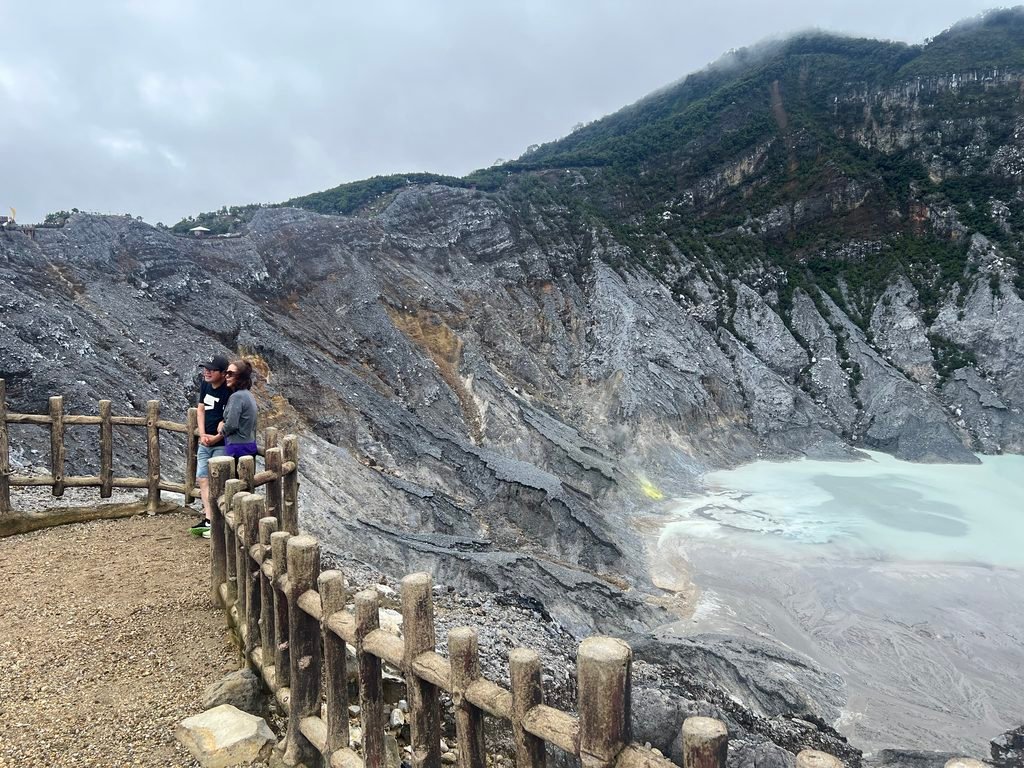
The Main Crater of Tangkuban Perahu
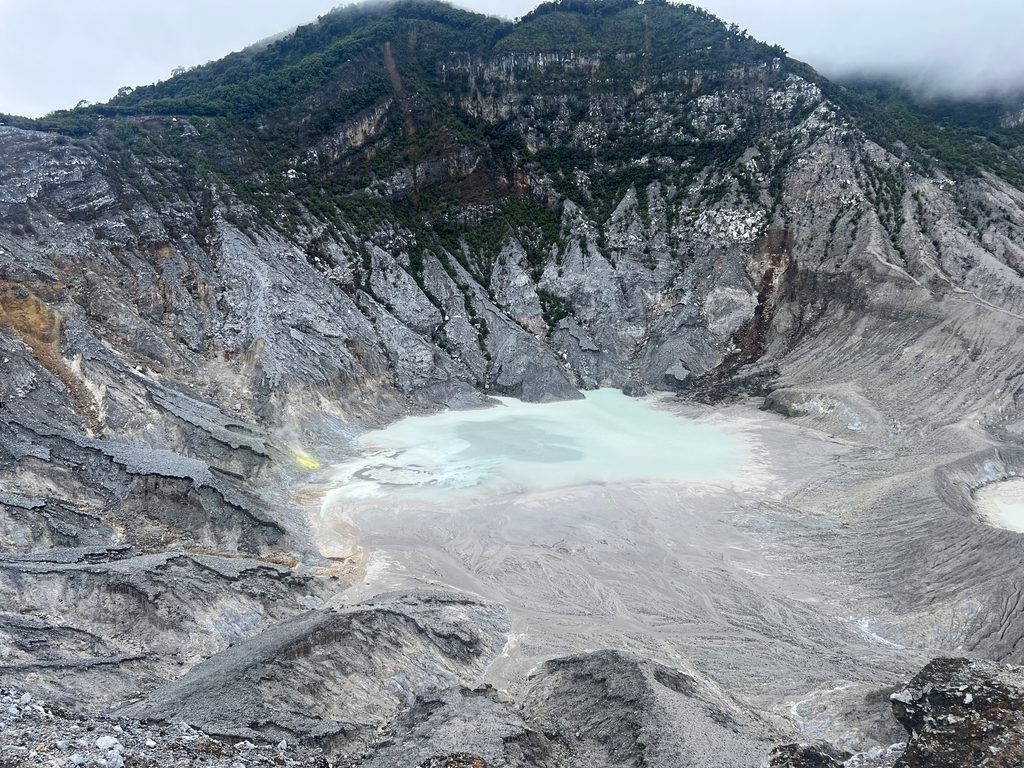
Tangkuban Perahu is an active volcano, and its main crater is the most impressive part of the visit. Unlike many volcano viewpoints that require a long hike, the main crater can be seen almost immediately after arriving at the upper parking area.
Standing at the edge, the scale of the crater is much larger than it first appears in photos. Steep grey volcanic walls surround the pale turquoise crater lake below, while mist and clouds often move across the surrounding mountains. The landscape feels raw and almost otherworldly, especially when the weather is cloudy.
What makes the experience even more interesting is knowing that Tangkuban Perahu is not an extinct volcano. It remains active, and signs of volcanic activity can still be seen around the area.
A Volcano That Is Still Active
Tangkuban Perahu is not simply an ancient crater — it is still an active volcano.
A notable eruption occurred on July 26, 2019, when a phreatic eruption from Kawah Ratu sent an ash column roughly 200 meters above the crater. Volcanic activity continued during the following weeks, with additional eruptions recorded through August and into September. During this period, access around the active craters was restricted and the volcanic alert level was temporarily raised.
The 2019 activity is a good reminder that the steaming vents, sulfur smell, and volcanic landscape you see today are not just remnants of the distant past. Tangkuban Perahu remains an active volcanic system that continues to be monitored by Indonesia’s geological authorities.
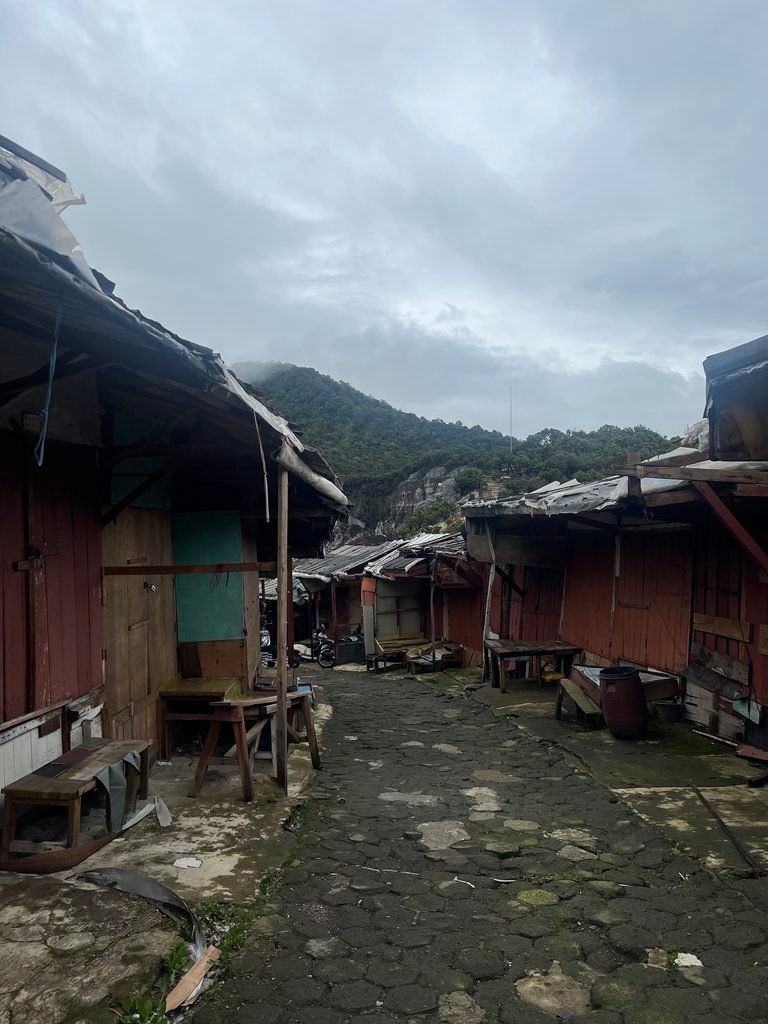
The Changing Souvenir Stalls Around the Crater
Another thing I noticed during this visit was how the souvenir area around the crater has changed over time. On my previous visits, there seemed to be more small shops selling unusual stones, volcanic-rock souvenirs, bracelets, and other locally made items.
Some of these stalls are still there today, but compared with what I remember from earlier visits, the area felt quieter and there seemed to be fewer shops specializing in stones and mineral souvenirs.
It is a small detail, but for returning visitors, these changes around the crater are also part of seeing how Tangkuban Perahu has evolved over the years.
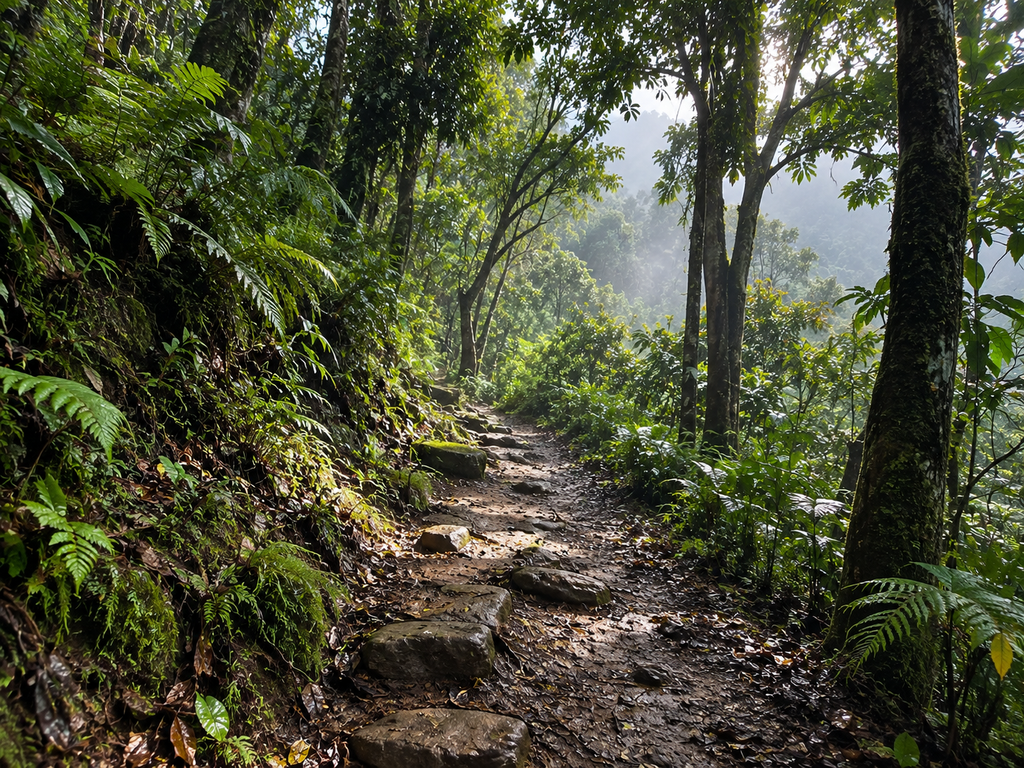
Kawah Domas: Getting Closer to the Volcano
After visiting the main crater of Tangkuban Perahu, Kawah Domas is a great place to stop on the way back down the mountain. Unlike the main crater, however, you cannot drive directly into Kawah Domas.
After parking near the entrance, you need to continue on foot along an unpaved mountain trail for around 20 minutes. The walk takes you through a more natural and forested part of the volcano, and as you get closer, the smell of sulfur and rising steam gradually make it clear that you are approaching an active geothermal area.
The walk itself is not particularly long, but comfortable shoes are recommended because the trail is unpaved and conditions can become slippery after rain.
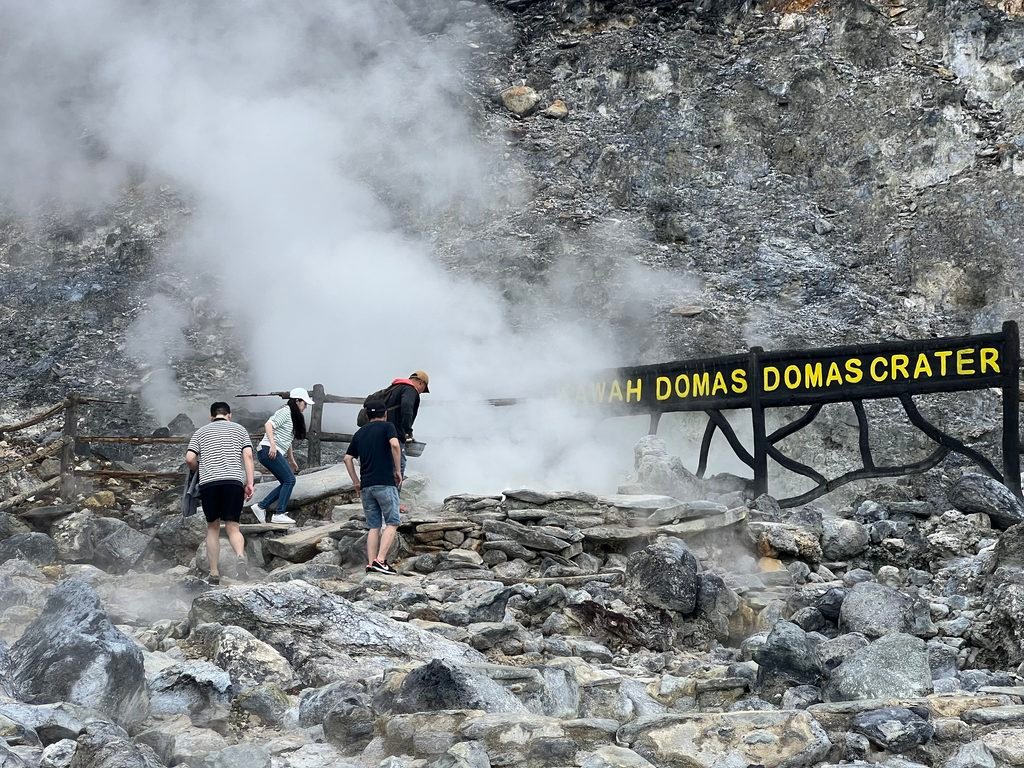
Arriving at Kawah Domas
After about 20 minutes of walking, the forest suddenly opens up and the landscape changes completely. You begin to see exposed volcanic rocks, steaming vents, and pools of hot water across the crater area.
Compared with the main crater of Tangkuban Perahu, Kawah Domas feels much more up close and personal. Instead of viewing the volcano from a distance, you can walk through the geothermal area with steam rising from the ground nearby.
The smell of sulfur can be quite strong, but seeing the steam and bubbling water this close makes the volcanic activity beneath Tangkuban Perahu feel much more real.
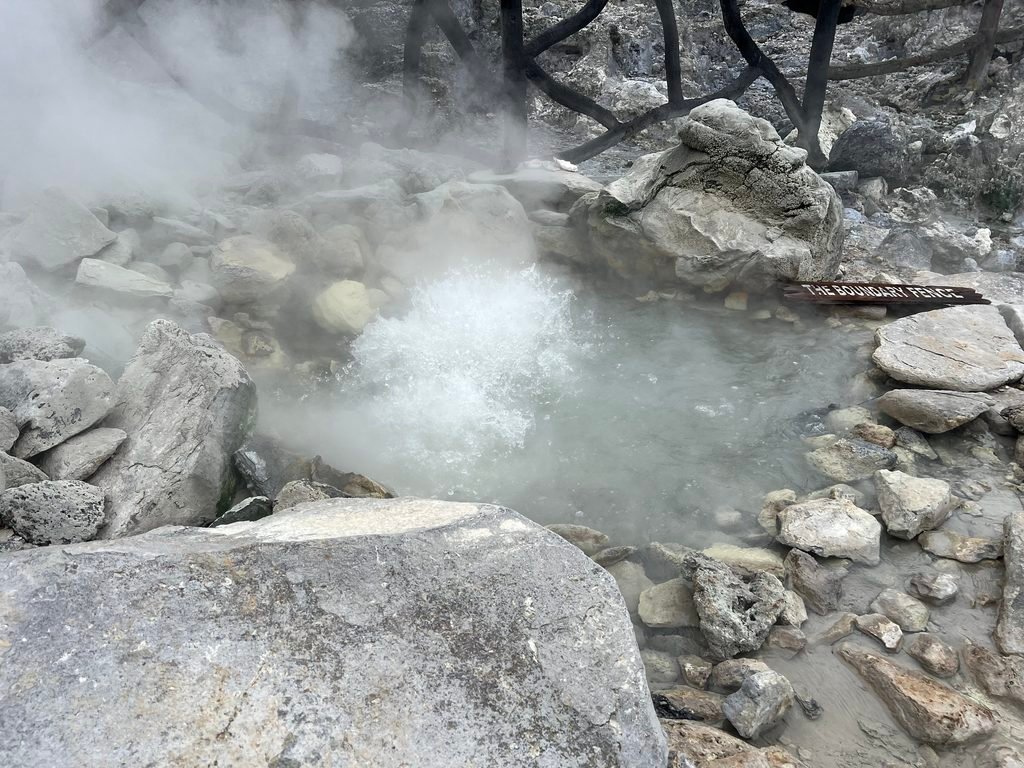
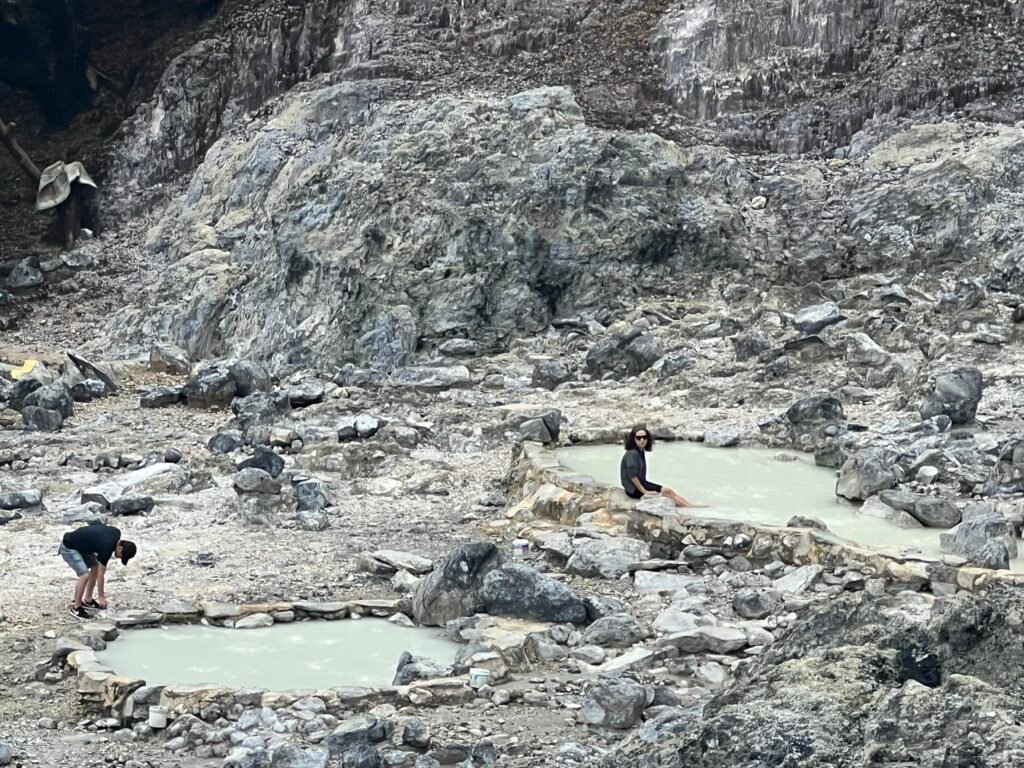
Hot Springs, Foot Baths and Boiling Eggs
One of the most memorable things about Kawah Domas is that you can do more than simply observe the geothermal activity.
There are natural pools with different water temperatures, and some areas are suitable for soaking your feet in the warm, sulfur-rich water. After walking through the forest trail, sitting down and relaxing your feet in the naturally heated water is a surprisingly enjoyable experience.
In the hotter pools, visitors can even boil eggs using the naturally heated water. I tried this during my visit, and although it is a simple activity, eating an egg cooked by the heat of the volcano is definitely one of those experiences you remember afterward.
Practical Tips for Visiting Tangkuban Perahu and Kawah Domas
Visiting Tangkuban Perahu and Kawah Domas is relatively easy, but a little preparation makes the trip much more comfortable.
The mountain area is noticeably cooler than Bandung, so bringing a light jacket is recommended. Weather can also change quickly, especially around the crater.
For Kawah Domas, comfortable walking shoes are important. The trail takes around 20 minutes and is mostly unpaved, so it can become muddy or slippery after rain. The sulfur smell can also be quite strong around the geothermal areas.
If you are visiting both places, I recommend seeing the main crater of Tangkuban Perahu first and then stopping at Kawah Domas on the way back down. Combined with a stay at Sari Ater Hot Spring Resort, the whole area works very well as a short getaway from Bandung.
Final Thoughts
Tangkuban Perahu and Kawah Domas offer two very different ways to experience the volcanic landscape of West Java. At the main crater, you can take in the scale of the volcano from above, while Kawah Domas brings you much closer to the geothermal activity with steaming vents, bubbling hot water, and natural hot springs.
For me, combining both places made the trip much more memorable than visiting the main crater alone. Adding a stay at Sari Ater Hot Spring Resort also made the journey feel less rushed, with time to enjoy the cooler highland atmosphere and hot springs between visits.
If you are planning a trip from Bandung and want something beyond the usual city attractions, this area is well worth adding to your itinerary.